Browse by:
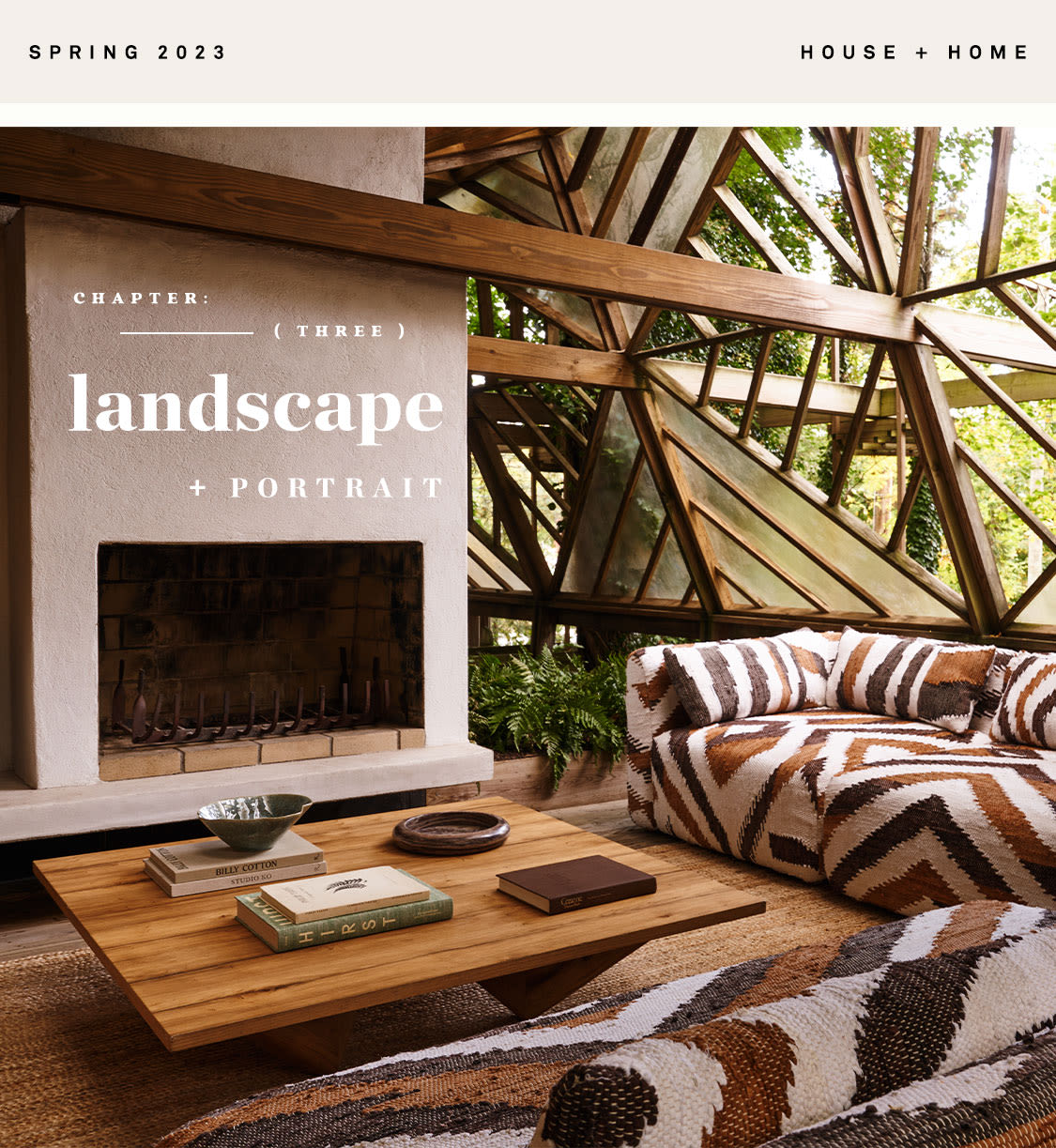
Tucked away in a lush canopy of greenery lies the 1953 residence of James Rose, the late pioneer of America’s modern landscape-architecture movement. It constantly evolves with its natural environment, blurring the lines of indoors and out – and you're invited to explore it.
Just as Rose intended, we transformed these serene, sunlit spaces into multipurpose rooms – from a roof garden turned outdoor living room (that features our Woven Asa Kori Modular Collection) to a meditation area turned cozy reading corner – and filled them with versatile pieces defined by movement (à la our Pamela and Edia Chairs), texture, and enough styled sensibility to withstand an always-changing backdrop.
Just as Rose intended, we transformed these serene, sunlit spaces into multipurpose rooms – from a roof garden turned outdoor living room (that features our Woven Asa Kori Modular Collection) to a meditation area turned cozy reading corner – and filled them with versatile pieces defined by movement (à la our Pamela and Edia Chairs), texture, and enough styled sensibility to withstand an always-changing backdrop.
Dark floor-to-ceiling woods – like that of our Pablo Sideboard – and a wide-open floor plan lend themselves to a midcentury modern mentality. Meanwhile, the simplified lines of our Ossa Karissa Dining Chair (below) and other earthen-hued accents feel rustic and refined – further proving the complex aesthetic of this home's intentionally improvisational design.
Heavily influenced by ancient Japanese culture after participating in the first World Design Conference in Tokyo in the Spring of 1960, Rose imagined an unconventional post-war residence – home to his mother, sister, and himself until his passing in 1991 – whose inherent beauty relied on artfully appointed elements of nature (such as our flora and fauna-inspired Birds of Autumn 3 and Crowded Ferns 2 Wall Art). Also featured: the Arroyo Dining Table and the Ossa Karissa Dining Chair.
What this three-part composite lacks in size (it’s about half the size of a tennis court!), it makes up for in spatial language. One of these languages is light: shadows dance and play around each room throughout the day, offering a fresh perspective on stunning pieces – from patterned plates to sculptural décor to airy illuminations.
This sustainably minded home features floors that transition from hardwood panels to stone pathways, mahogany benches built from old doors, and geometric walls that go from fiberglass shoji screens to woven reeds to open air without one ever leaving the room.
Textural analysis reveals a study of contrast. The minimalist teak frame of our Ashton Accent Chair allows its luxe velvet upholstery to read as spring-seasonally light. For an accent of subtlety and sophistication, consider layering the intuitive patternwork of the Lamina Rug and the Minka Pot into your vignette.
Textural analysis reveals a study of contrast. The minimalist teak frame of our Ashton Accent Chair allows its luxe velvet upholstery to read as spring-seasonally light. For an accent of subtlety and sophistication, consider layering the intuitive patternwork of the Lamina Rug and the Minka Pot into your vignette.
The second-floor roof garden and zendo – which we converted into an ethereal sanctuary with the help of our Calantha Duvet – also contribute to the home’s treehouse-esque nature while providing a sacred place for nourishment, relaxation, and reflection. It’s “neither landscape nor architecture, but both; neither indoors, nor outdoors, but both,” as Rose described it.
The Juneau is already a fan-favorite bestseller, but we can’t resist raising the bar even further. Now available in showstopping, top-shelf leather, this one might be our favorite bar cabinet yet.
Open shelving, open minds. The Teak Maderas Bookshelf, by Masaya & Co., isn’t just sustainably sourced – it’s also a showcase of amorphous, inspired design. The illumination of the Quarry Table Lamp offers a flattering complement – its natural curvature and hand-hewn appearance feel organically bright.